The Real Risk Isn't AI or ChatGPT – It's Missing Out While Your Competitors Win Customers
Don't let competitors steal your customers. AI voice agents are answering calls your team misses. See how UK SMEs are capturing 150+ opportunities/year. The real risk? Waiting too long.Don't let competitors steal your customers. AI voice agents are answering calls your team misses. See how UK SMEs are capturing 150+ opportunities/year. The real risk? Waiting too long.
The Opportunity Nobody Talks About
There's a lot of conversation about AI these days. Some of it's genuinely exciting, some of it feels overwhelming, and if we're honest, some of it seems intimidating for business owners who are still figuring out where it fits.
The question most business owners ask isn't "should we use AI?" but rather "what happens if we get this wrong?" It's a fair concern.
Here's what's actually happening though: whilst you're weighing the pros and cons, your competitors aren't wondering anymore. They're already answering calls at midnight, booking appointments automatically, converting enquiries that would've gone straight to voicemail, and handling customer questions through AI chatbots powered by ChatGPT-level intelligence.
The real risk isn't AI. It's missing this moment whilst everyone else moves forward.
The Fear We Should Actually Have
Let's talk about Sarah. She runs a plumbing business in Manchester—three vans, solid reputation, been trading for twelve years. Last month, she lost a £4,000 bathroom renovation job.
Not because she wasn't qualified. Not because her quote was too high. She lost it because she didn't answer the phone at 6pm on a Tuesday.
The customer rang four plumbers. Sarah was their first choice based on reviews. But she was the third plumber to pick up, and by then, the job was already booked with someone else.
That's the fear worth having. Not "what if AI goes wrong" but "what am I losing right now by not having it?"
What's Already Happening (While You're Thinking About It)
Right now, across the UK, businesses just like yours are using AI voice agents, intelligent chatbots, and automation workflows to:
Answer every single call, even when the office is closed, staff are busy, or it's the third snow day this winter
Book appointments directly into your calendar without endless phone tag
Qualify leads in real-time so your team only speaks to serious, genuine enquiries
Handle FAQs automatically that normally eat up hours of reception time each week
Provide instant quotes, check availability, and process payments without human intervention
Manage customer support 24/7 through AI chatbots that handle common questions with ChatGPT-like sophistication
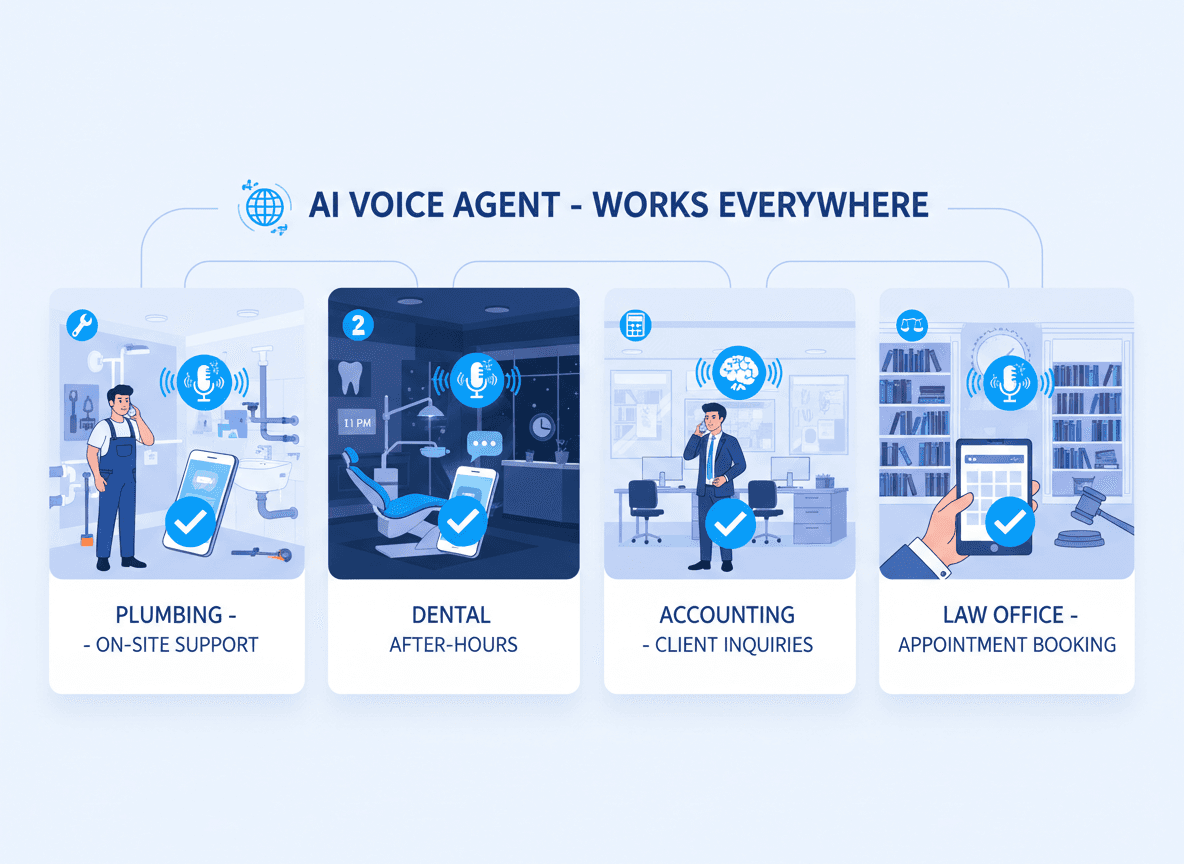
These aren't Fortune 500 companies with unlimited budgets. They're accountants in Bristol, dental practices in Edinburgh, law firms in Birmingham, tradespeople in Leeds, and service businesses across every sector.
They're not doing this because they're tech-obsessed. They're doing it because they were tired of missing opportunities. And because they realised that intelligent automation wasn't a luxury—it was a competitive necessity.
Understanding Where Your Business Fits: The 7 Levels of AI Agents
Before diving headfirst into AI implementation, it's worth understanding how AI agents operate and which level makes sense for your business. Not all AI is equal, and knowing where you are—and where you need to be—changes everything.
Research from industry experts has mapped out seven distinct levels of AI agent capability, from simple reactive systems to potentially super-intelligent ones. For SMEs, this framework isn't just theoretical—it's a practical roadmap for understanding what's possible right now versus what you might build toward.
Level 1: Reactive Agents – Your Starting Point
These are the simplest AI systems. They respond in the present moment without memory or learning from past interactions. Think basic chatbots that answer "what are your opening hours?" using keyword detection.
For SMEs: This is where most businesses start. A simple voice agent that answers calls after hours and says, "We're closed, but I can book you an appointment for tomorrow at 10am." Effective, straightforward, and immediately stops lost calls.
Level 2: Task-Specialized Agents – Mastery in One Area
These agents excel at specific, narrow tasks. Like systems trained for fraud detection or medical imaging, they're specialist-grade at one thing.
For SMEs: Your AI receptionist becomes expert-level at appointment booking, or your chatbot masters FAQ about your service area. It learns the nuances of your specific business and gets genuinely better at it.
Level 3: Context-Aware Agents – The Game Changer
Now we're talking about systems that evaluate multiple types of data—structured, unstructured, real-time, historical—to make intelligent decisions in complex environments.
For SMEs: This is where modern AI voice agents live. An AI receptionist that understands you're a plumber, recognises that the caller is asking about an emergency call-out, contextually understands it's 11pm on a Sunday, and knows whether you take emergency bookings. It doesn't just answer; it understands.
Level 4: Socially Savvy Agents – Reading the Room
These agents integrate emotional intelligence. They detect tone, interpret intent, and adjust responses based on how someone is feeling. They understand human behavior and adapt accordingly.
For SMEs: An AI that hears frustration in a customer's voice and escalates to your team immediately. A chatbot that recognises confusion and offers detailed explanation instead of a generic response. It feels less robotic because it genuinely is less robotic.
Level 5: Self-Reflective Agents – Learning and Improving
Agents at this level examine their own performance, identify failures, and improve over time without constant reprogramming.
For SMEs: Your AI system notices it's getting appointment bookings wrong for Tuesday mornings (because you close for team meetings) and corrects itself. It spots that customers consistently ask about your WiFi setup and adds that to the standard greeting. It gets smarter without manual intervention.
Level 6: Generalized Intelligence – Multiple Domains
Systems that work across different types of tasks and domains. Not specialist in one area; they handle diverse challenges seamlessly.
For SMEs: Further down the road, imagine one AI system handling appointments, customer support, payment processing, and order tracking—all in one natural conversation. That's the evolution.
Level 7: Super-intelligent Agents – The Future
Agents that surpass human capability across most domains. Theoretical for most businesses currently, but part of the AI evolution roadmap.
For SMEs: Less immediately relevant, but understanding this trajectory helps you build scalability into your current AI decisions. What you implement today should be able to grow into tomorrow's capabilities.
The practical takeaway: Most UK SMEs operating effective AI voice agents today are working at Levels 1-3, with sophisticated implementations touching Level 4. That's not a weakness—that's exactly where you should be. You don't need superintelligence. You need an AI that handles calls better than voicemail, understands context, and frees your team to focus on actual growth.
The real insight here: The businesses winning with AI aren't waiting for Level 6 or 7. They're implementing Level 2-3 agents today and seeing immediate ROI. The conversation has already shifted from "should we aim for AGI?" to "how quickly can we get a context-aware system answering our phones?"
The Numbers Are Hard to Ignore
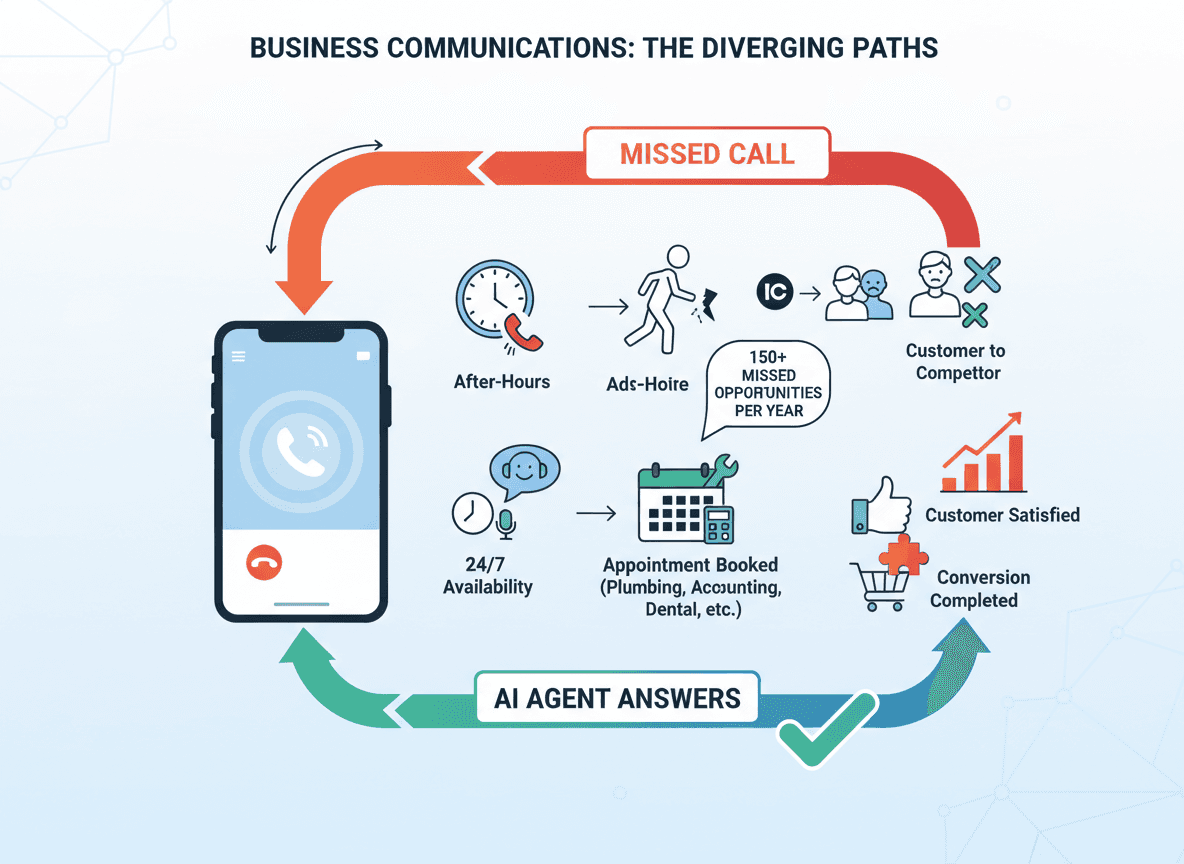
If you're a typical UK SME, you're probably missing between 20-30% of your calls during business hours. After hours? You're missing 100% unless you've got someone on call.
Let's be conservative and say you get 50 calls a week. If 25% go unanswered, that's roughly 12-13 missed opportunities. Even if only half of those were genuine enquiries, and only half of those would've converted…that's still 3 potential customers per week choosing your competitors instead.
Over a year, that's 150+ opportunities that went somewhere else.
Not because you weren't good enough. Not because you weren't qualified. But because you literally weren't available when they needed you.
An AI voice agent doesn't take holidays. Doesn't get stressed. Doesn't call in sick. It just works.
The "Human Touch" Conversation
This is the objection we hear most often, and it's completely fair. Nobody wants their business to feel robotic or impersonal. Nobody wants their customers experiencing a cold, scripted interaction.
Here's what's interesting though: modern AI agents don't replace the human touch. They protect it.
Think about it realistically. When your receptionist is juggling three calls, dealing with someone at the desk, managing emails, and trying to finish the filing before lunch—how "human" is that fourth caller's experience?
They're either getting a harried "can I call you back?" or they're hitting voicemail.
An AI voice agent handles the routine stuff. The "what are your opening hours?" The "can I book an appointment for Thursday?" The "do you cover my area?" questions. The repetitive inquiries that don't really need a human brain.
This frees your actual team to have proper, meaningful conversations with customers who genuinely need that personal attention. The complex queries. The consultations. The relationship-building calls.
Your clients still get the human touch. They're just not waiting for it when they don't actually need it.
The Competitive Reality Playing Out Right Now
Here's a scenario happening across every industry sector:
Two accountancy firms. Similar size, similar services, similar pricing. Both get a call at 7:30pm from a business owner who's just realised they need their year-end accounts sorted urgently.
Firm A: Phone rings out to voicemail. The business owner leaves a message, but they're stressed and need answers tonight. So they keep ringing. Other numbers. Other firms.
Firm B: AI receptionist answers immediately. Confirms they can help with year-end accounts. Checks availability in the system. Explains the process. Books a consultation for tomorrow morning. The business owner hangs up relieved. Problem solved.
Which firm gets the work?
This isn't hypothetical. This is happening right now in accountancy, legal services, plumbing, electrician work, dental practices, and every other sector. The question isn't whether it's happening—it's: which firm are you?
Starting Small Beats Waiting for Perfect
One of the biggest misconceptions about AI is that it's all or nothing. That you need to transform your entire operation overnight. That it's a massive project requiring a complete overhaul.
It's not.
Most businesses start simple: an AI voice agent that handles after-hours calls. Or covers lunch breaks. Or manages appointment bookings. You test it, refine it, see what actually works for your business.
It's less "rip everything out and start again" and more "let's handle these missed calls so our team can focus on delivering brilliant service to the customers we've already got."
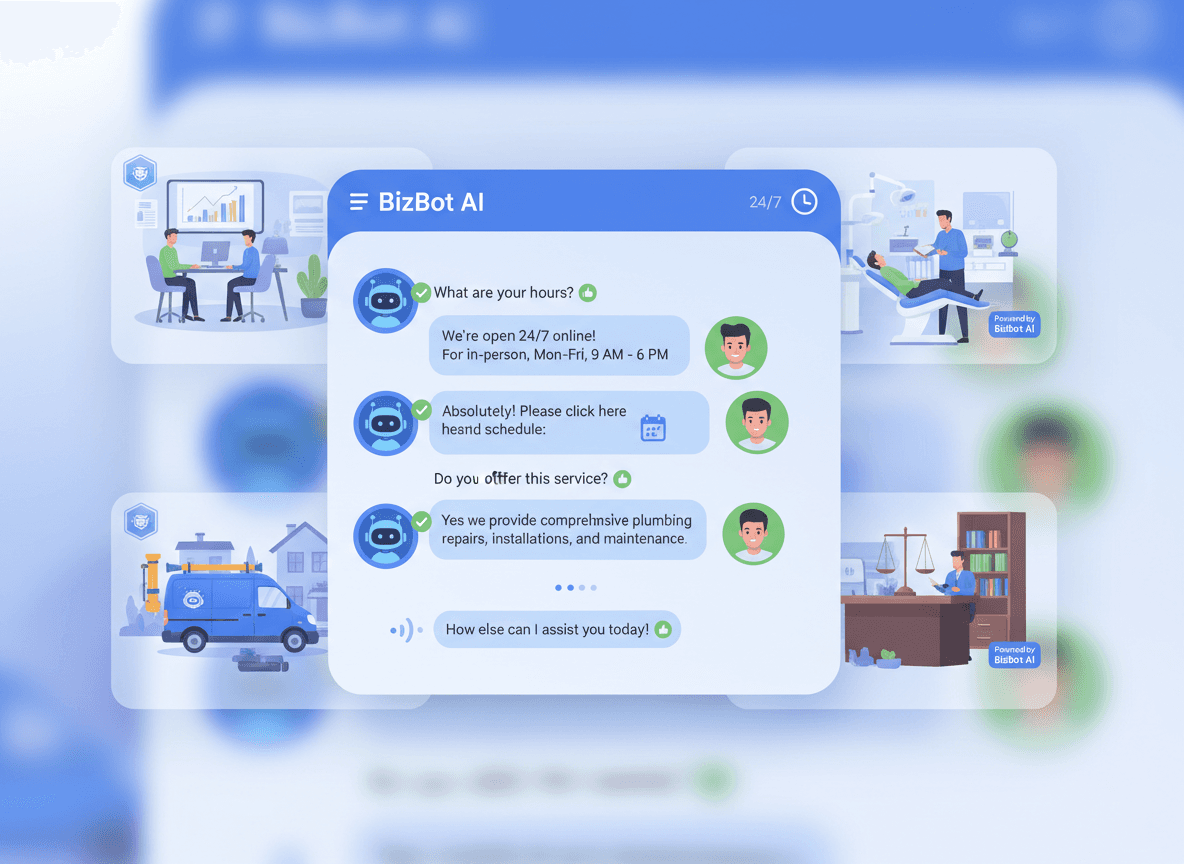
This is where ChatGPT-level language models are genuinely transformative—they understand context, handle natural conversation, and don't feel scripted or robotic.
Why This Matters for Your Business (Specifically)
If you're in professional services, trades, healthcare, or any client-facing business:
Every missed call is a lost opportunity. Not just a conversation—a potential customer choosing someone else.
Your competitors already know this. They've moved past "should we?" and are measuring ROI on their AI agents.
The technology is affordable for SMEs. It's not a Fortune 500 luxury anymore. It's accessible infrastructure.
Implementation doesn't require months. Most businesses see their AI voice agent live and handling calls within days.
The Real Question Isn't "Should We?" Anymore
The conversation about AI has shifted. It's no longer "should we consider this someday" but "how quickly can we get this working for us?"
Because whilst you're pondering the philosophical implications of automation, your competitors are capturing the customers who:
Rang at 6:15pm after work
Called during the school run
Tried to get through on a Sunday morning when they finally had time to sort out that thing they've been putting off
Left a voicemail that never got returned quickly enough
The technology exists. It works. It's proven. It's affordable. And it's already being used by businesses in your sector who are quietly winning the customers you don't even know you're losing.
What Happens Now?
The risk isn't trying AI and getting it wrong. The risk is waiting so long that by the time you're ready to implement, you've forgotten what all those missed opportunities could've become.
If you want to explore how AI voice agents, intelligent chatbots, and automation workflows could work for your specific business, that conversation doesn't have to be complicated. It doesn't require a massive commitment upfront.
But it does require starting.
The businesses winning right now didn't wait for perfect. They got moving.
This AI Now helps UK SMEs implement AI voice agents, ChatGPT-powered chatbots, and automation workflows that capture missed opportunities and drive real business growth. If you're interested in exploring what's possible for your business, let's talk.
Reach out for a Complimentary Diagnostic:
📧 support@thisainow.com
📞 +442046318826
🌐 https://www.thisainow.com/contact-us
📅 Availability: https://calendly.com/support-thisainow/30min